

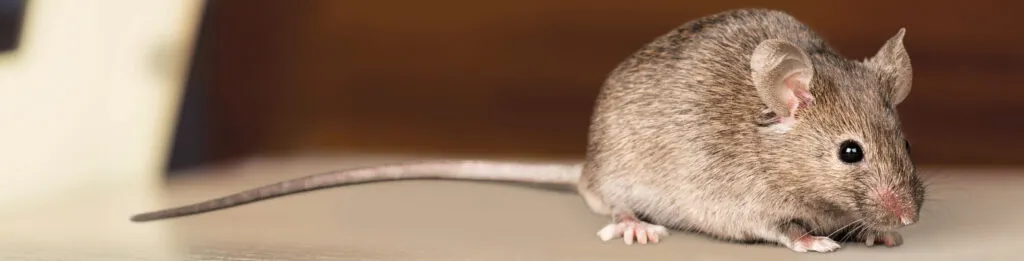
If there are small droppings everywhere and holes everywhere, you may be suffering from mice. If so, it is important to act immediately. For the most effective and animal-friendly control,contact OFS Service by calling 085-7470473. We’ll tell you what to do about mice with key tips for mouse control. For example, have you ever thought about a pet-friendly mousetrap that only requires items you probably already have in your home? Read on for even more different methods to solve mice infestation.
Chase away mice?
One possible solution is to scare away the mice. This can be done using sounds, light or scents. There are several products available to chase away mice. It is important to use these products regularly so that the mice do not return.
How do you catch mice?
Another option is to catch the mice. This can be done using a mouse trap or a mouse clamp. Make sure the trap or clamp is placed in a place where mice frequent. It is also important to check the trap or clamp regularly so that the mice do not suffer unnecessarily.
It is also possible to catch the mice without killing them, but you have to be smarter than a mouse and have a long breath. And then just hope you can catch the mice faster than they reproduce, because otherwise it’s like carrying water to the sea. But how do you catch mice with or without animal-friendly mousetraps?
Animal-friendly mousetrap in 10 steps
With the animal-friendly mousetrap, you catch several mice alive. First you have to gather the materials, but then you have something powerful. It may be the best animal-friendly mousetrap ever. Below are the supplies and the steps to make the trap:
Supplies:
-
- A bucket without a lid
-
- A piece of cardboard
-
- A knife
-
- A long thread
-
- A wooden board
-
- Food
- Food
10 steps
- Take a bucket without a lid.
- Cut a piece of cardboard in the shape of a table tennis bat.
- Make a notch just below the edge of the bucket.
- Make two holes next to the notch on each side.
- Slide the handle end of the knife into the notch.
- Push the long wire through the holes and through the cardboard holder.
- Tie the ends of the yarn securely.
- Glue the wooden board to the bucket exactly where the cardboard starts.
- Place the food in the center of the table tennis paddle.
- Does the mouse approach the food and stand on the cardboard paddle? The weight of the mouse causes the cardboard to bend and the mouse falls into the bucket. Don’t want the mouse to be stressed? Then place a straw and the food on the bottom of the bucket to keep the animal calm.
In addition to this homemade animal-friendly mousetrap, standard animal-friendly (walk-in) traps are also available for sale.
Benefits of an animal-friendly mousetrap
Animal-friendly mouse control has its advantages. You don’t have to kill mice, so your conscience is clear. Another plus is that you don’t have to put poison anywhere. This prevents (unintentional) exposure of (small) children or pets to poisons and the poison does not end up in nature. Therefore, use an animal-friendly mousetrap.
The less animal-friendly alternatives
You can also buy a traditional mouse trap, but of course it is much less animal-friendly. You put food in the trap; preferably peanut butter or chocolate spread and as soon as the mouse grabs the bait, the trap slams shut and the mouse dies instantly. You can also buy a walk-in trap to keep mice alive, but keep in mind that they can die from stress if they are trapped too tightly. Therefore, choose a wide trap so the animal can still move.
A mousetrap powered by electricity
The electric mousetrap is not exactly animal-friendly either. How does this mousetrap work? The trap has a bait. When the mouse approaches the bait, it runs over the metal plate, which is electrified. The trapped mouse is then electrocuted and dies. However, not all shocks are immediately fatal, sometimes leaving the mouse with a long agony to go. Therefore, it is better to make your own animal-friendly mousetrap.
The most animal-unfriendly way to catch mice.
Glue traps are anything but animal-friendly. The mouse gets caught in the glue and then slowly dies a gruesome death. Some mice even bite off their legs to escape. So glue traps are banned and even subject to heavy fines! It may be more merciful to set mouse traps where the trap slams shut immediately and the mouse dies instantly. On the other hand, if a mouse lands incorrectly in the trap and therefore does not die immediately, it may still suffer unnecessarily.
Attracting mice: how do you do it?
Using attractive bait in a mouse trap is just as important as choosing different types of mouse traps. Now mice’s favorites are “luxury” products such as chocolate spread, bacon or peanut butter, but they can also be lured with other sweet foods. Do you prefer to put seeds, nuts or kernels in the trap? This is also possible. And if the chosen bait does not “work,” you can try other baits.
Where should mousetraps be placed?
Mouse traps should be placed on routes where mice walk. For example, along the walls of the kitchen, basement or storage room. Remember that mice may avoid the traps if they can smell a person. In this regard, it does not matter how enticing your bait is. This is why many choose ready-made traps: they can be removed from the package with gloves and set them immediately.
Catching mice can be very difficult because mice are always well hidden. You end up finding many traces of them such as eaten food, objects or cables, belly grease and traces of droppings. Of course, you would prefer to ignore the problem (we understand that all too well), but something really needs to be done about it.
Fighting mice professionally
If there is no other option, it may sometimes be necessary to control mice. This should always be used as a last resort. There are several ways to control mice, but it is important to use these ways with care. This is because some methods can be harmful to people or pets. At OFS Services, however, we use only the most environmentally and animal-friendly methods.
